
Muscat’s Miscalculation: Hormuz Is Not Malacca

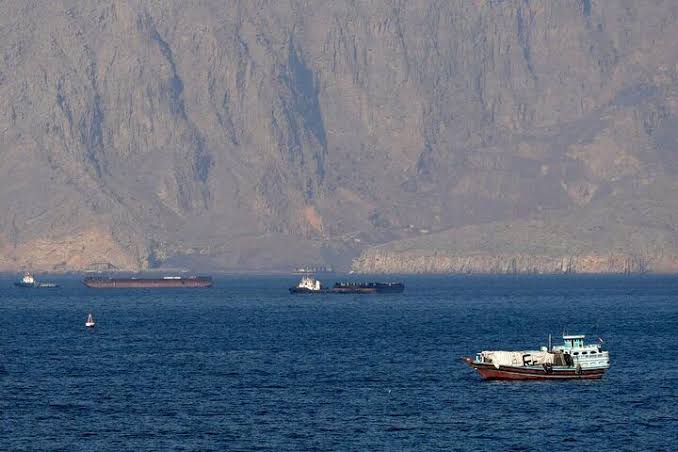
SeaNews – Oman’s proposal for the joint management of the Strait of Hormuz and the establishment of a regional mechanism to administer this critical maritime chokepoint was presented as an initiative aimed at reducing tensions and restoring the normal flow of global maritime trade. However, it has been met with firm opposition from the Islamic Republic of Iran. Recent remarks by Kazem Gharibabadi, Iran’s Deputy Foreign Minister for Legal and International Affairs, indicate that the disagreement between Tehran and Muscat extends far beyond minor adjustments to shipping lanes. At its core lies one of the Gulf’s most fundamental geopolitical questions: governance, sovereignty, and responsibility for safeguarding security in the world’s most strategically significant energy corridor.
According to details released by Iranian officials, Oman’s proposal was based on an equal, 50-50 division of maritime traffic management, whereby shipping routes through the Strait would be shared equally between the two coastal states. The proposal also envisaged the creation of a voluntary fund, financed by contributions from international shipping companies, to support navigational safety, aids to navigation, marine environmental protection, and search-and-rescue operations. The concept was reportedly inspired by the governance model of the Strait of Malacca in Southeast Asia, which Muscat sought to adapt to the Gulf region.
Iranian policymakers, however, argue that such a comparison overlooks the unique security realities of the Strait of Hormuz. From Tehran’s perspective, the security environment in Hormuz differs fundamentally from that of other international waterways, making it inappropriate to replicate management models developed elsewhere without considering the geopolitical and operational complexities of the Persian Gulf. Consequently, Iran not only rejected the proposed equal division of shipping routes but also presented an alternative plan under which all inbound traffic and a substantial portion of outbound traffic would transit through Iranian territorial waters. According to Iranian officials, such an arrangement would enable more effective monitoring, operational oversight, and management of potential security risks.
The dispute, however, extends beyond the technical issue of shipping lanes. It also raises broader questions regarding the relationship between security responsibilities and management authority. For decades, Iran has argued that it has borne the primary burden of monitoring, surveillance, and responding to security challenges along the northern coastline of the Strait of Hormuz, where it possesses the longest coastline and significant geographical oversight of the waterway.
Against this backdrop, Tehran’s central question is straightforward: if Iran carries what it describes as the principal operational and security responsibilities in the Strait, on what basis should managerial authority and the associated economic benefits be divided equally? Iranian officials have also pointed to legal and administrative uncertainties surrounding the proposed voluntary fund, including its governance structure, supervisory authority, and the allocation of financial resources.
The comparison between the Strait of Hormuz and the Strait of Malacca is itself a matter of considerable debate. In Malacca, Indonesia, Malaysia, and Singapore have developed decades of institutional cooperation focused primarily on non-military challenges such as piracy, smuggling, and navigational safety. By contrast, the Strait of Hormuz has become one of the world’s principal theatres of geopolitical competition, hosting frequent military deployments by regional and extra-regional powers and remaining vulnerable to periods of heightened international tension. These structural differences raise questions about whether a governance model designed for Malacca can be effectively applied to Hormuz.
The international legal dimension further complicates the issue. The International Maritime Organization (IMO) has stated that it was not involved in developing Oman’s proposal and has reiterated that any changes to the Traffic Separation Scheme (TSS) or internationally recognised shipping routes must follow the organisation’s established technical and legal procedures and receive approval from its member states. This position underscores that the future management of the Strait of Hormuz is not merely a bilateral issue between Iran and Oman but one that falls within the broader framework of international maritime law.
Ultimately, recent developments suggest that the debate over the Strait of Hormuz is entering a new phase. Rather than focusing solely on freedom of navigation or regional security, the discussion has expanded to encompass questions of maritime governance and the balance between sovereignty, operational responsibility, and international cooperation. While regional and international stakeholders continue searching for mechanisms to reduce tensions and ensure the uninterrupted flow of global commerce, Iran maintains that any future arrangements for the Strait must, in its view, fully reflect its national security considerations and the operational realities on the ground.
How this debate evolves will shape not only the future governance of one of the world’s most important maritime chokepoints but also broader questions surrounding international trade, global energy security, and maritime stability across the Gulf region.
