

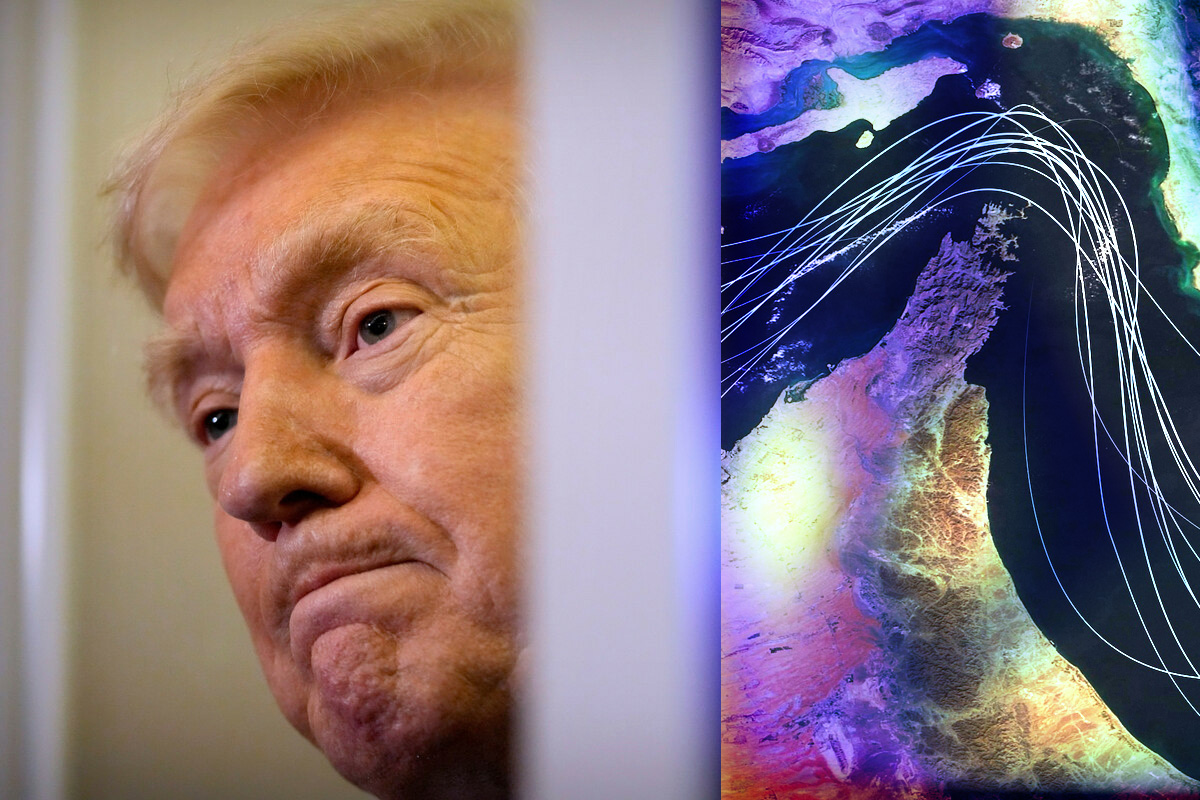
The decision by Donald Trump to initiate the operational phase of a “blockade” in the Strait of Hormuz is less a sign of strength and more a dangerous miscalculation of the realities on the ground.
By this move, Washington has crossed red lines that have maintained a fragile regional order for decades. What the Pentagon and CENTCOM have failed to realize is that the Strait of Hormuz is not just a coordinate on a map; it is an integral part of Iran’s sovereignty and strategic depth—a theater where America’s “absolute military advantage” evaporates in the face of Iranian resolve and expertise in asymmetric warfare.
From Deterrence to Aggression: Washington Held Accountable
The shift in American rhetoric from “ensuring freedom of navigation” to a “blockade” is effectively a declaration of war against international law and Iran’s national sovereignty. Trump must understand that by becoming an interventionist actor in maritime traffic, he has stripped his presence of any remaining legitimacy, granting Iran the full right to utilize all its defensive assets. This “doctrinal pivot” places Washington in the position of an aggressor, directly responsible for any obstruction, conflict, or incident in this vital chokepoint.
The Energy Trap: Trump Pulls the Trigger on Western Economies
Trump may believe that pressuring the Strait will isolate Iran, but in reality, he has pulled the trigger on the heart of his allies’ economies and even American domestic markets. Any disruption in the passage of 20% of the world’s energy will trigger a price shock, turning “Trumpian Inflation” into a nightmare for American voters. The exponential surge in war-risk insurance premiums and freight rates is just the tip of an iceberg that could bring the global supply chain to its knees. Iran has proven that if energy security is not for everyone, it will be for no one.
The Illusion of Security: Hormuz, a Graveyard for Expensive Tech
The deployment of destroyers like the USS Michael Murphy against Iran’s sophisticated defense network resembles a televised PR stunt more than a sound military strategy. Trump must remember that in the narrow and unique geography of Hormuz, multi-billion dollar American vessels are prime targets for Iran’s fast attack crafts, precision drones, and next-generation naval mines. The “minesweeping operations” previously touted by the U.S. are an “impossible mission” under the watchful eyes and fire of Iran’s armed forces—a task whose human and reputational costs for the White House will be irreparable.
Diplomatic Isolation: Global Backlash Against Maritime Bullying
This move is not just a confrontation with Iran; it is an affront to major powers like China and India, whose economic lifelines flow through this waterway. With this gamble, Trump has pitted the U.S. against the world. Washington’s allies have no interest in paying for his hubris with economic recession and energy crises. Through active diplomacy and field power, Iran will demonstrate that the era of “maritime hegemony” is over, and that Tehran holds the primary key to peace in this strait.
Final Warning: Hormuz, the Graveyard of Hegemonic Ambitions
Ultimately, Mr. Trump must realize that Hormuz is a “Strategic Red Line” for Iran. Entering this game means stepping onto a field where Iran writes the rules. Any attempt to blockade or interfere with Iran’s legitimate rights will be met with a multi-layered, regret-inducing response that extends far beyond the geographical borders of the Persian Gulf. Washington is sinking into a quagmire from which there is no easy exit. Hormuz may well be the place where the myth of invincible American military power runs aground forever.
