
The Curse of Chokepoints: Why Washington Is Trapped in a Quagmire
When the “Contain China” doctrine runs aground on the rocks of Hormuz and Bab el-Mandeb

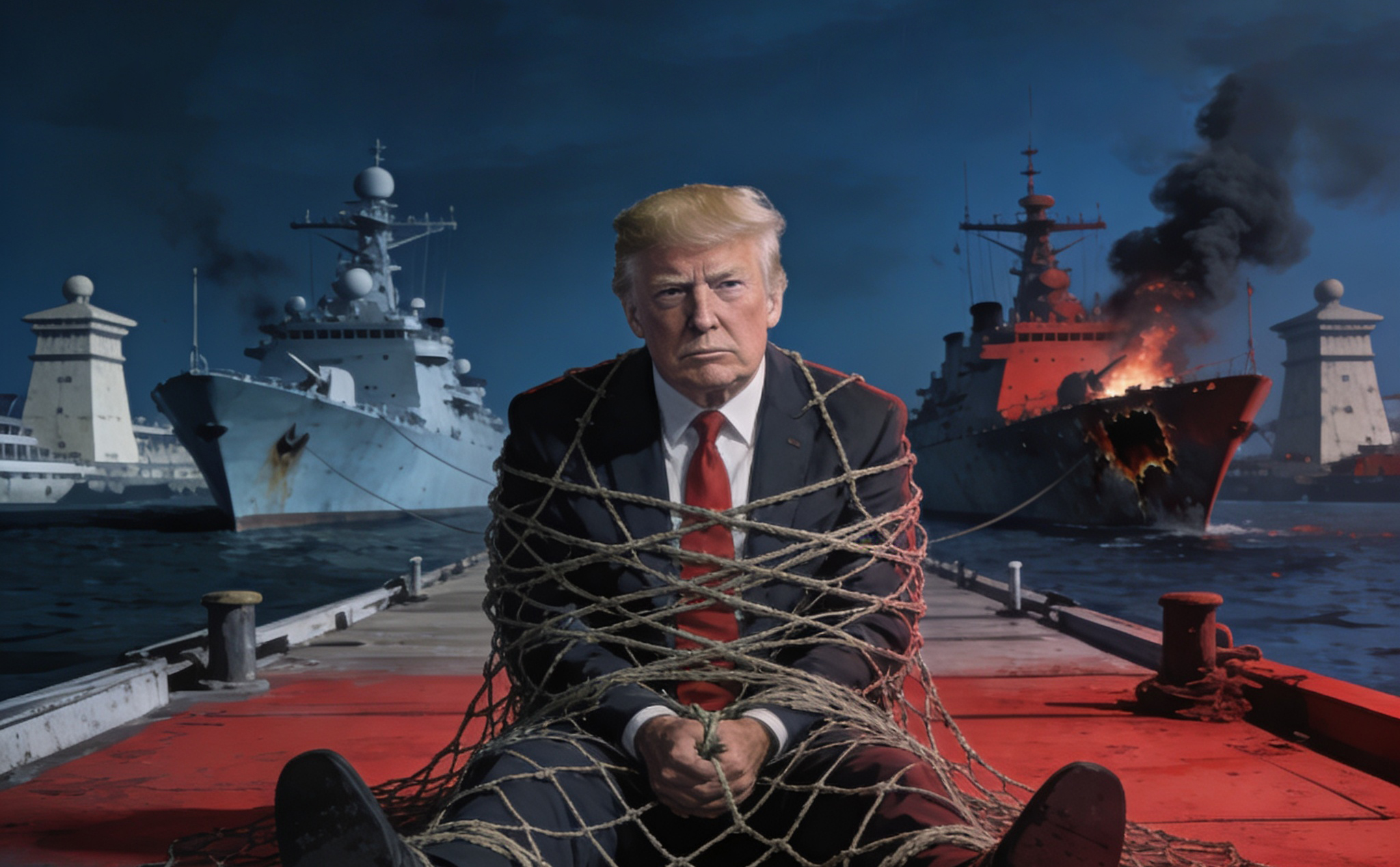
Sea News *- In the world of strategy, there is a concept known as the “geographical trap”: a situation in which a superpower, despite possessing the most advanced weaponry, becomes ensnared within a few square kilometers of land or water. Today, the United States finds itself in precisely such a predicament. While Washington’s think tanks have for years championed the slogan of a “Pivot to Asia” and the containment of China, realities on the ground in the “southern heart of the world” suggest that exiting the Middle East is less an actionable strategy for the White House and more a distant aspiration.
Geography vs. Technology: The Nightmare of Shallow Waters
American naval power is built on dominance over vast oceans, where massive aircraft carriers reign supreme. But in the Strait of Hormuz and Bab el-Mandeb, these iron giants effectively become large, vulnerable targets. In 2026, the debate is no longer about blocking these chokepoints; today’s battle is one of “strategic attrition.” Each time security is disrupted in Hormuz or Bab el-Mandeb, Washington is compelled to redeploy military assets from the Far East (the Pacific) back to the Persian Gulf. This is the “curse of chokepoints”: a chain that prevents the United States from abandoning its post at this critical crossroads.
A Deadlock in Containment Doctrine: The Washington–Beijing Contradiction
The central paradox is this: to economically contain China, the United States must control the world’s energy arteries. Since a significant portion of the fuel powering China’s economy passes through the Strait of Hormuz, Washington cannot disengage from the region. Yet remaining there means spending billions of dollars and wearing down a naval fleet that was intended for deployment in the South China Sea.
This situation has placed Beijing in an ideal position; without firing a single shot, China watches its rival sink deeper into the Middle Eastern security quagmire.
The Battle of Words: Where International Law Joins the Shoreline
Iran, through a calculated use of its sovereignty over territorial waters, has challenged the passage of military vessels. The United States, which positions itself as the guardian of freedom of navigation, faces a deadlock in the Strait of Hormuz where “law” and “geography” have converged. In this environment, every naval movement carries both diplomatic and military risk. The constant pressure to maintain this fragile balance has subjected Pentagon decision-making structures to unprecedented strain—strain that manifests in confusion in command and frequent shifts in regional strategies.
Corridors That Fail to Bypass Reality
Efforts during the Trump era to establish alternative routes—such as the India–Middle East–Europe corridor—aimed at reducing the strategic importance of Hormuz have so far failed to diminish its geopolitical weight. The reality is that no port in Haifa and no route through the Saudi desert can replace the daily transit of 20 million barrels of oil. The “curse of chokepoints” underscores a fundamental truth: geography cannot be bypassed with paper agreements. As long as the heart of global energy beats in this region, Washington will be forced to bear the cost of policing it—even if it comes at the expense of losing ground in the Pacific.
The Persian Gulf is no longer the “secure lake” it once was for the United States. Today, it has become a chain binding a superpower. In 2026, America can neither stay (due to mounting costs) nor leave (for fear of its Chinese rival). Ultimately, it is the hard rocks of Hormuz and the turbulent waves of Bab el-Mandeb that dictate to American diplomats and generals that real power lies with those who control the shore—not those seated thousands of miles away in the White House.
