
The Sharp Edge of Hormuz: How the Iran War Became an Electoral Liability for Republicans Copy headline

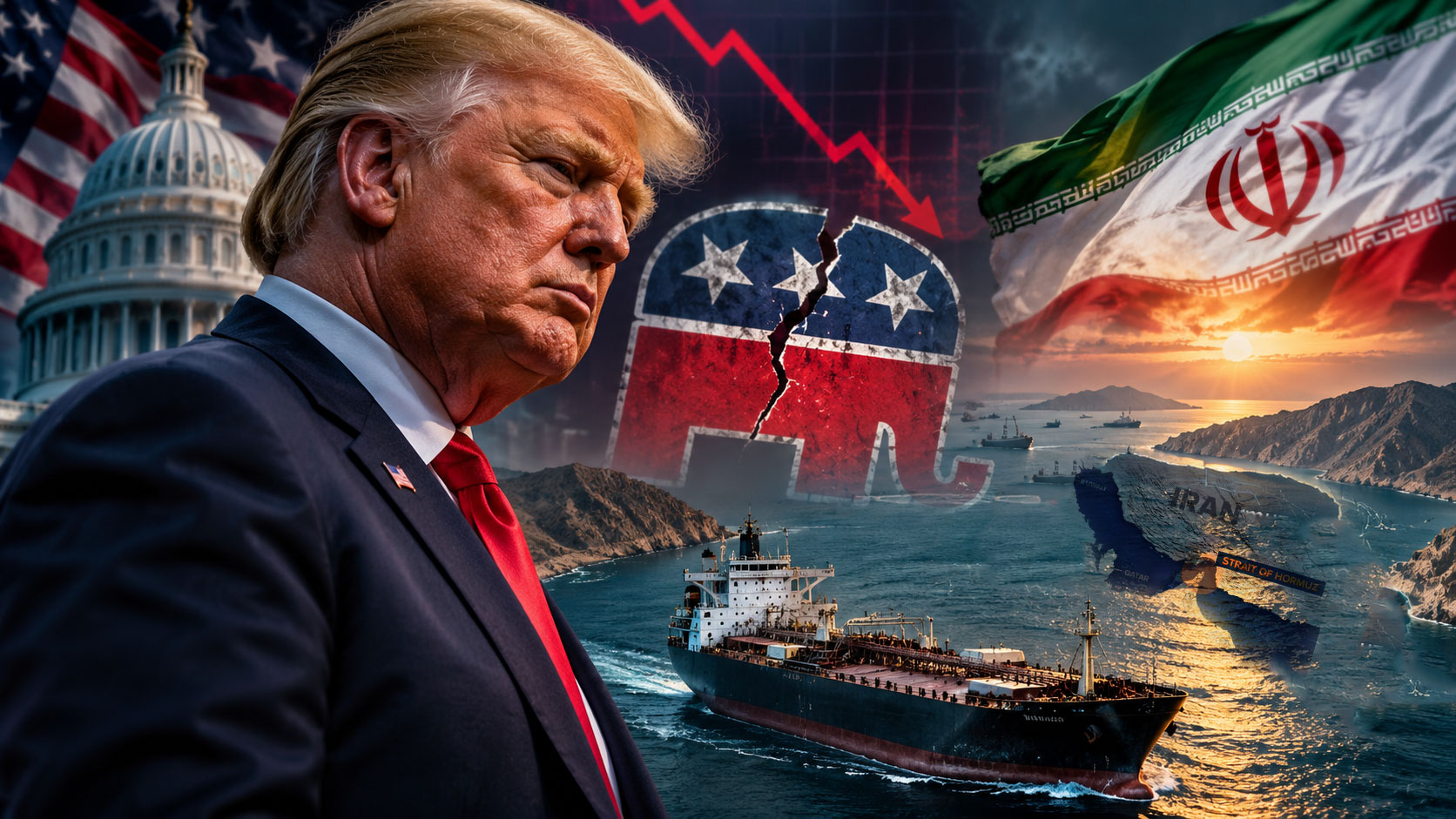
What Did Washington Overlook in Its Military Calculations?
Revisiting the consequences of the war with Iran in the U.S. congressional midterm elections.
The Republicans’ setback in the U.S. congressional midterm elections has once again highlighted a strategic reality: wars are not necessarily decided on the battlefield. Their economic consequences can shape the political fortunes of governments thousands of kilometers away.
In a SeaNews analysis, the November 3, 2026, U.S. elections can be viewed through precisely this lens. The Democrats gained control of both chambers of Congress, placing President Donald Trump’s administration in a markedly different political environment.
Notably, the role of the war with Iran in the Republican electoral defeat is no longer being raised solely by Democratic rivals. In comments to U.S. media, Trump acknowledged that the war had affected the election results. Vice President JD Vance went further, identifying the war as a principal factor in his party’s loss, even as Trump continued to defend his decision to launch the conflict.
The Strait of Hormuz: The Variable Washington Underestimated
Conventional assessments of military power often focus on superior weapons, air capabilities, intelligence assets and the capacity to destroy an adversary’s infrastructure.
Yet the recent war, particularly in the Persian Gulf, has demonstrated that in today’s interconnected global economy, strategic geography and the ability to influence international trade routes can matter as much as military capacity.
The Strait of Hormuz is far more than a maritime passage between the Persian Gulf and the Gulf of Oman. It is one of the world’s most sensitive links between Middle Eastern energy producers and global consumer markets.
Disruptions to tanker movements, heightened security risks, restrictions on insurance coverage and diversions of goods and energy flows all carry consequences far beyond the immediate region.
Earlier assessments warned that a prolonged Hormuz crisis could affect not only energy prices but also petrochemicals, fertilizers, marine insurance and global supply chains. The report argues that, rather than returning to diplomacy and recognizing Iran’s strategic leverage, U.S. decision-makers opted to accept further escalation.
This raises a central question: did U.S. officials adequately calculate the indirect and long-term costs of disrupting this waterway—and of waging war with Iran?
From Tanker Decks to American Gas Stations
To understand the Strait of Hormuz’s influence on U.S. politics, one must follow the chain through which the costs of the crisis are transmitted.
When navigation through a strategic waterway becomes insecure, the market’s first response is not necessarily a physical reduction in oil supply. Higher transport risk, shifting trader expectations, rising insurance premiums and reduced availability of shipping capacity can all put upward pressure on prices.
Shipping companies must factor additional costs into their commercial decisions, including war-risk insurance, vessel delays, schedule changes, increased fuel consumption and disruption to cargo delivery timetables.
These costs can ultimately reach both energy-importing economies and major producers through energy prices, freight rates, raw materials and consumer goods.
The United States is not immune to this mechanism despite its substantial oil production, because crude oil and refined products are priced in international markets.
The scale of the pressure was evident in figures published before the elections. According to an October 8 ABC News report, the U.S. average gasoline price exceeded $4.30 per gallon—roughly 46% above its pre-war level. Anadolu Agency also cited an increase of nearly 40% in fuel prices on November 3 as one of the sources of pressure on Republicans.
The Cost of War, in One Chart
Approximate average U.S. gasoline price (USD per gallon)
Scale: $5 per gallon. The pre-war figure is an approximation derived from the reported 46% increase. The October price was reported as “more than $4.30.”
For American households, a gasoline price rise is more than a movement in the energy market. It can affect commuting, freight transport, services and ultimately the cost of everyday life.
Under such circumstances, a war being fought thousands of kilometers away becomes visible to U.S. consumers in the form of tangible household expenses.
When the Cost of War Becomes a Question of Political Trust
A defining feature of U.S. midterm elections is that voters are not simply choosing their representatives; they are also passing judgment on the performance of the administration in power.
Post-election reporting indicates that the war with Iran, the rising cost of living, inflation and dissatisfaction with aspects of the Trump administration’s domestic and foreign policies all influenced voter sentiment.
In an ABC News voter survey, around 34% of respondents said the war was a vital factor in their electoral decision. Meanwhile, Vance’s comments indicate that concern over the war’s consequences had also reached Republican political circles.
Vance said after the election that some former Trump supporters wanted the war to end, greater attention to inflation and living costs, and a reconsideration of U.S. foreign-policy priorities.
This matters for another reason. During his election campaigns, Trump had promised to avoid new wars. The continuation of the Iran conflict and its rising economic costs enabled critics to point to a widening gap between those promises and the White House’s foreign-policy decisions.
In this way, the cost of the conflict moved beyond military and security considerations and became part of a broader debate over the credibility of the U.S. administration’s policies, including criticism of the civilian toll of the war.
Iran’s Geopolitical Leverage Beyond Military Calculations
Iran sits alongside one of the world’s most important energy chokepoints, giving security developments in and around the Strait of Hormuz consequences for the international economy.
What has stood out during the recent war is Iran’s capacity to influence the security and economic calculations surrounding this passage. A remark attributed to former U.S. President Barack Obama captures the underlying argument: “Iran now has a veto through the Strait of Hormuz.” The original wording and context of this attribution, however, require independent verification.
The Congressional Setback: A New Phase for Trump’s War Policy?
The Democrats’ gains in both chambers of Congress signify more than a change in the parliamentary balance. Control of the House of Representatives and the Senate gives the party greater scope to scrutinize the administration, challenge its policies and demand accountability for the costs and objectives of the war with Iran, including the possibility of impeachment proceedings.
Of particular interest, a number of Republican figures and advisers reportedly called for a change in the administration’s direction following the electoral defeat.
The White House could therefore face two forms of pressure at once: managing military and security developments in the Persian Gulf, while answering questions from voters and Congress about the cost of continuing the conflict.
A change in congressional control does not, however, mean that the war will automatically end or that Washington’s foreign policy will necessarily shift. The U.S. president retains substantial foreign-policy and military powers, and the administration’s next steps will depend on domestic and international developments.
Hormuz: The Variable That Reached the Ballot Box
One of the central lessons the report draws from recent events—for the international community and the transportation industry alike—is the danger of underestimating the consequences of a military confrontation with Iran.
From this perspective, the U.S. midterm elections raise a serious question about Washington’s strategic calculations: before entering the conflict, did officials sufficiently consider how insecurity in the region’s principal energy waterway could affect the U.S. economy and public opinion?
The results suggest that opposition to the war and dissatisfaction with its economic consequences were important elements of the electoral debate. It would nevertheless be too simplistic to attribute every vote or the entire Republican setback to the Strait of Hormuz alone.
