
The Naked Truth Behind UAE Ports’ Financial Statements Exposed

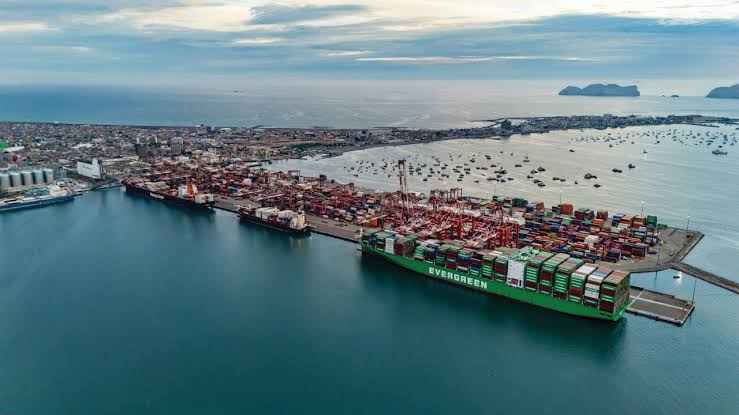
SeaNews — In its latest financial report, AD Ports Group announced that its Q2 net profit surged by 88% to AED 836 million ($227.6 million), with total revenue climbing 47% to AED 7.08 billion ($1.93 billion). This report comes amid wartime conditions in the region and data revealing a sharp 65% plunge in container throughput within UAE domestic ports, alongside a 67% collapse in bulk cargo volumes.Nevertheless, company officials claim that surging freight rates across Gulf, Indian Subcontinent, and Red Sea routes, combined with asset sales, yielded an unparalleled financial performance—a claim we examine in this report.
Hidden Angles and Comprehensive Data Analysis of the Past Month
An analysis of regional port data and official maritime trade metrics over the past month reveals that the “extraordinary financial jump” hyped by Emirati media is less about economic vitality and more about a media show and promotional campaign designed to divert public attention from the structural crisis facing UAE ports in the Persian Gulf.
Widespread Stagnation Across UAE Coasts؛ A 90% Drop in Jebel Ali
Data from the past month indicates that this operational crisis is not limited to Abu Dhabi ports. Analytical reports suggest that even Dubai’s port giants faced a historic 90% drop in container throughput at Jebel Ali Port during the second quarter. The region’s entry into wartime conditions, coupled with destabilizing US military presence, has blocked traditional shipping routes and plunged UAE ports into unprecedented transit strangulation.
The 65% drop in container throughput and 67% crash in bulk cargo volumes serve as stark evidence of the paralysis gripping the core of the country’s commercial operations.
Windfall Profits from Rate Bubbles and Supply Chain Strain
The answer to how the company’s net profits soared despite severe drops in cargo volumes lies directly in the price bubble created by market disruptions. A 103% surge in feeder rates across Gulf and Indian Subcontinent routes, alongside a 56% hike in Red Sea rates due to insecurity and route diversions, has generated an artificial shortage in the vessel and container market. In reality, the UAE moved significantly less cargo while exploiting critical market conditions to impose doubled costs on cargo owners—behavior that reflects an economic strain on the supply chain and the transfer of crushing inflation to regional consumers, rather than genuine trade growth.
Accounting Maneuvers: AED 650 Million in Asset Sales
Emirati media propaganda conceals the fact that a major portion of the reported profits did not stem from maritime operations. Detailed scrutiny reveals that AED 650 million in revenue and AED 294 million in profits (EBITDA) resulted purely from the sale of fixed assets and real estate. Dressing up financial statements to present attractive figures to foreign investors is a tactic aimed at masking the severe instability of UAE revenues.
Escaping Forward and Mounting Debts
The UAE’s recent moves to sign billion-dollar acquisition deals for ports and logistics firms in Brazil and Germany highlight a frantic effort to escape the Persian Gulf’s geographical bottleneck and shift its heavy debt load—which has crossed AED 22.7 billion—outside the region.
A Sustainable Solution: Abu Dhabi’s Need to Reevaluate and Engage with Iran
Media shows and embellished reports cannot alter geopolitical realities. Reliance on a destructive US presence and compliance with Washington’s escalation have brought no security to UAE ports, instead suffocating the country’s transit arteries.
The only way for the UAE to escape these unsustainable financial bubbles and severe operational decline is to abandon media illusions and accept regional realities. Leadership in Abu Dhabi must recognize that maritime security and genuine supply chain prosperity in the Persian Gulf can only be secured through direct, transparent, and strategic engagement with the Islamic Republic of Iran as the region’s principal power.
Sidelining destabilizing US interventions and adopting a collaborative approach with Tehran to utilize secure regional corridors represents the sole path capable of rescuing Persian Gulf ports from stagnation.
