
How Persian Gulf Realities Reshaped White House Calculus?

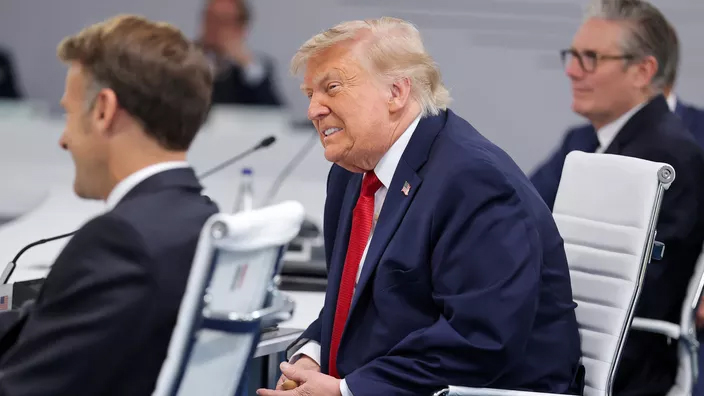
In the lexicon of media diplomacy, realities are sometimes embedded between the lines of bombastic threats and fierce statements. Moving past the journalistic hype, these realities expose the true dimensions of a strategic confrontation. Donald Trump’s recent positions during his meeting with his Egyptian counterpart on the sidelines of the G7 summit in Evian, France, represent a classic textbook example. The U.S. President, who once considered any concession or compromise with Tehran a red line under his “maximum pressure” doctrine, now speaks of the benefits of a deal with Iran in a glaring shift, indirectly admitting to the effectiveness of Tehran’s leverage. Rather than a voluntary strategic shift, this change in tone symbolizes the imposition of the Persian Gulf’s geopolitical realities onto the White House’s calculations.
The first and most critical climax of these remarks is Trump’s explicit confession to Iran’s role in global energy markets. When the American president identifies the closure and insecurity of the Strait of Hormuz as the primary driver behind the spike in fuel prices, and immediately ties its reopening to the prospect of a deal, he effectively draws a red line through years of Washington’s media propaganda claiming “the futility of Iran’s actions.” This is a raw, journalistic confession to Iran’s deterrence power at the jugular vein of the international economy. It proves that Tehran has successfully driven up the cost of destabilizing its peripheral environment for the West to such an extent that the businessman-turned-president, Trump, sees no choice but to accept the reality of Iran’s power to calm Wall Street and satisfy the American consumer.
However, the centerpiece of Trump’s speech, which received heavy media spin, is his claim of not investing “even 10 cents” in Iran. In journalistic analysis, this proposition must be viewed as a “defensive shield for domestic consumption.” Trump, well aware that any leniency toward Tehran would trigger fierce criticism from Washington hawks, uses this populist rhetoric to maintain an illusion of upper-hand dominance and unyielding resolve. Nevertheless, by immediately stating that “we cannot prevent others from investing in Iran,” he effectively exposes the Achilles’ heel of the policy designed to isolate Iran. This sentence serves as an overt green light to Western and Asian partners, signaling a crack in the wall of sanctions that Washington spent years cementing.
Ultimately, the seasoning of repetitive threats regarding “bombing and the return of sanctions” in this interview is less of an operational and credible threat and more of a psychological technique to mask a tactical retreat. True to his signature strategy, whenever Trump is forced to accept reality and back down from his positions, he elevates the dosage of verbal hostility to keep his “tough guy” persona unblemished. Yet, Abdel Fattah El-Sisi’s welcoming and gratitude for this covert agreement testifies to the reality that regional capitals caught the signal of America’s shifting behavior and the efficacy of Iran’s strategic resistance far ahead of the media; a matrix where Iran, without paying any ransom, compelled the opposing side to review the realities on the ground.
