
Two Straits in Tehran’s Grip; The “Unified Logistics Network” Strategy on Iran’s Desk

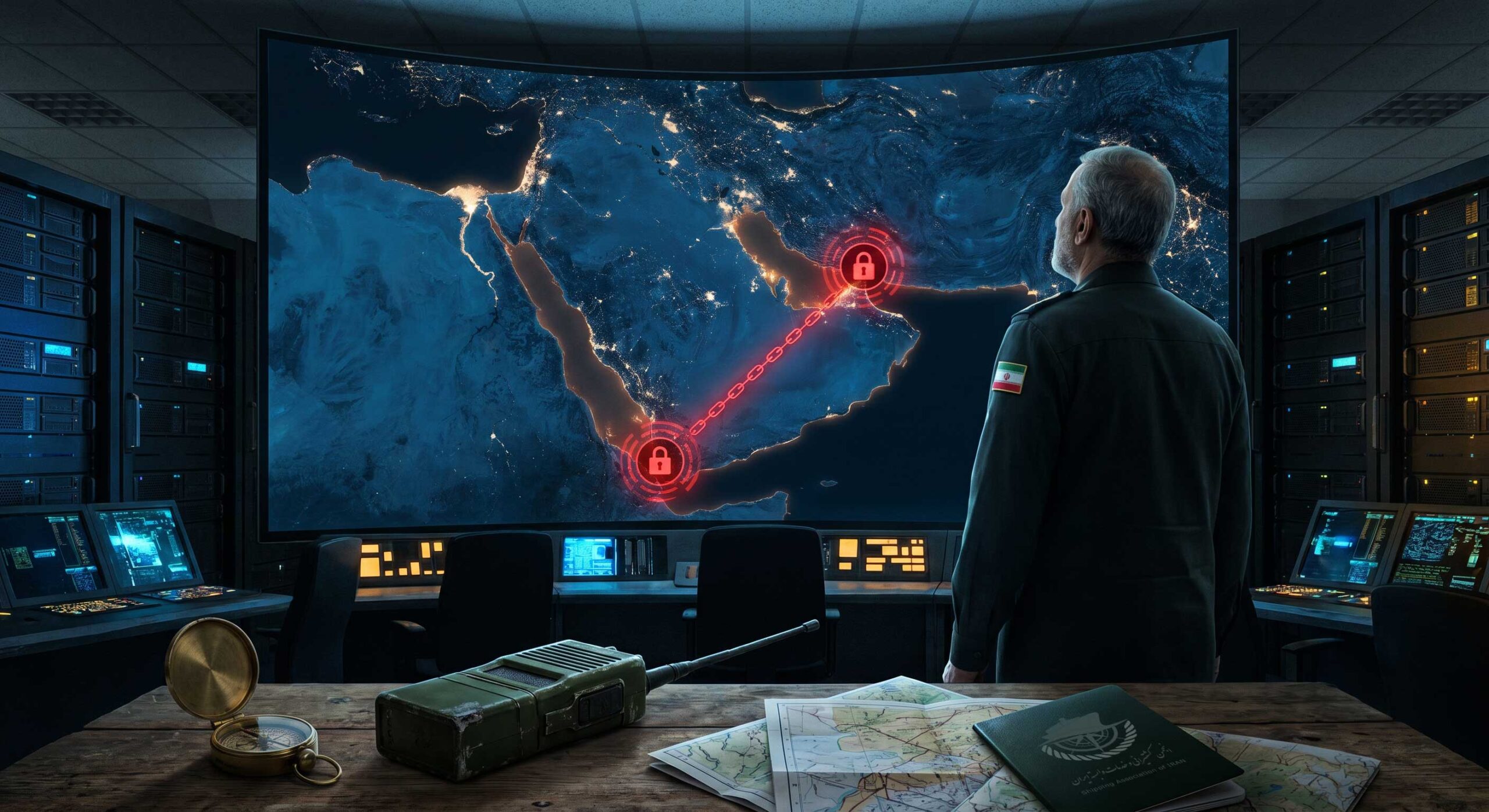
Sea News — On Monday morning, June 8, 2026, moving past a fragile ceasefire, the Middle East once again witnessed a direct exchange of fire. However, amid the roar of missiles and the flight of drones, what truly redrew the geopolitical geometry of this conflict were the explicit and strategic remarks of Dr. Ali Akbar Velayati, International Advisor to the Supreme Leader of Iran. Pointing to Iran’s overnight missile strikes—dubbed the “Zat al-Salasil” operation—he addressed the opposing coalition, declaring: “The choice is yours: cease the foolishness or enter the structured balance of the two straits!”
These remarks mark the official unveiling of Tehran’s new naval-military doctrine in the event of repeated aggression by the US and Israel. But what are the dimensions of this strategy, and why does it directly hold hostage the grand interests and Western investments in the Gulf Arab states?
Implementing the “Simultaneous Lock” Strategy in the Strait of Hormuz and Bab-el-Mandeb
Previously, Western intelligence assessments assumed that Iran’s maritime deterrence was concentrated solely on the “Strait of Hormuz,” while instability in the “Bab-el-Mandeb” was managed via proxies. Velayati’s warning demonstrated that if aggression continues, Iran will manage these two vital checkpoints as a single, connected, unified logistics network. Should the enemy take the next step, Iran and the Axis of Resistance will utilize anti-ship cruise missiles, loitering ammunition (suicide drones), and smart sea mines to simultaneously lock down the maritime supply chains in both straits.
Directly Threatening US and Israeli Investments in Arab States
In recent years, the Gulf Arab countries (particularly the UAE and Saudi Arabia) have become a haven for Western and Israeli private sector technological, port, and logistical investments; ranging from AI projects to the development of modern ports and alternative transit routes bypassing the Suez Canal (such as the UAE-Saudi Arabia-Jordan-Israel land corridor). When Iran speaks of the “Balance of the Two Straits,” it sends a clear message to Riyadh and Abu Dhabi: investment security is indivisible. If the US and Israel intend to threaten Iran’s infrastructure, all of these multi-billion-dollar investments across the Persian Gulf and the Red Sea will lose their value and utility overnight by being caught in the insecurity network of the two straits.
Dismantling Alternative Corridors and the Dream of “Connecting to the Mediterranean”
One of the primary objectives of the US and Israel was to bypass Iran’s geopolitics by establishing rail and road networks from the ports of Dubai and Dammam toward Israeli ports on the Mediterranean (such as Haifa). With its new formula, Iran shows that both the origin (Persian Gulf) and the destination or key chokepoints of these routes (Bab-el-Mandeb) are under the full oversight of the Axis of Resistance. Activating the “Balance of the Two Straits” means compromising the security of outbound ports in Saudi Arabia and the UAE, effectively paralyzing their ambitious economic designs.
The End of Separating “Commercial Security” from “Military Security”
Tehran’s clear message to the US and its allies is this: the formula where Israel attacks Iranian soil or the interests of the Axis of Resistance while Western commercial ships, Europe-bound fuel tankers, and the trade flows of normalizing Arab states safely pass through Bab-el-Mandeb or Hormuz is permanently expired. Using the keyword “structuring the two straits,” Iran warns that the right to safe passage and the continuation of economic stability in neighboring countries will be directly conditional on the political and military conduct of the West toward Iran.
Holding the Global Economy and Trump’s Agendas Hostage
Donald Trump assumed office promising economic stability, curbing energy prices, and expanding the Abraham Accords commercial ties, but Iran’s new maritime strategy targets his administration’s Achilles’ heel. A potential lockdown of these two straits would not only push oil prices well past the $100 mark but would also skyrocket maritime war risk insurance premiums, practically forcing major global shipping lines to completely boycott the region. This signifies a total collapse of Trump’s economic diplomacy in the Middle East.
Conclusion
With the “Balance of the Two Straits” formula, Iran has tied the security of its own ports to the security of all Western-Arab ports and investments in the region. The ball is now in the US and Israel’s court; they must choose whether they wish to restore stability to the global energy and maritime markets by halting their attacks, or if they want to see their own economic interests and those of their Arab partners go up in flames within the largest trade arteries of the 21st century by repeating their foolishness.
