
Attack on Larak Island, Oil Above $90: Regional States Must Come to Their Senses

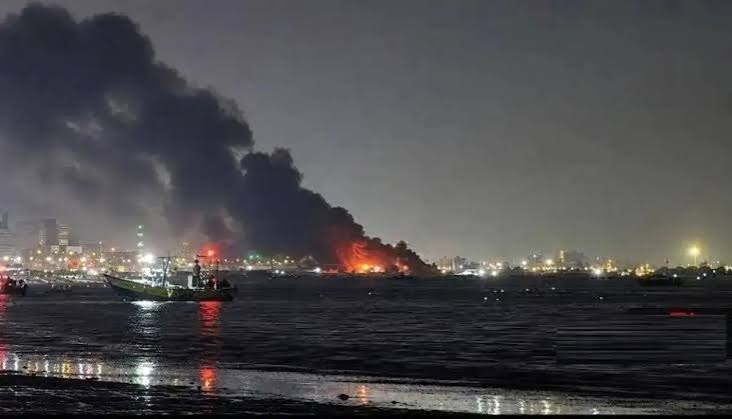
Sea News — The escalation of military tensions between the United States and Iran, coupled with reports of a U.S. attack on Larak Island and a surge in oil prices above the $90-per-barrel threshold, has opened a new and dangerous chapter in the Strait of Hormuz crisis, posing unprecedented challenges to the vital arteries of the global economy and the tanker market.
U.S. military interventions and escalating actions in the waters of the Persian Gulf have once again exposed an approach that imposes enormous economic costs on global markets and the peoples of the region. Turning the security of the Strait of Hormuz—a critical artery for global energy supplies—into a geopolitical bargaining chip is a clear example of the costs generated by Washington’s policies, sending shockwaves through global supply chains.
These destabilizing actions are not merely a security maneuver. They represent a direct blow to economies dependent on energy imports, which are forced to bear the consequences through soaring war-risk insurance premiums, higher tanker freight rates and increased marine fuel costs.
The broader impact of U.S. policies in the region demonstrates that continued military involvement has repeatedly contributed to instability, higher energy costs and growing uncertainty along vital trade routes.
Asian economies, as the principal consumers of Middle Eastern oil, are now on the front line of the crisis. As uncertainty drives up transportation and production costs, the effects are ultimately being passed on to consumers and businesses across global markets. Yet Washington continues to pursue a policy of escalation.
The imposition of these direct and indirect costs on international supply chains is a clear indication that U.S. policy toward the Middle East has become a catalyst for interconnected crises—crises that ultimately affect household purchasing power and the momentum of global trade.
A Regional Response Is Now Essential
Under the current circumstances, regional governments need a fundamental reassessment of their security strategies and must move away from passivity.
Gulf capitals and neighboring states should, rather than spending enormous amounts of time and resources on formal military and security coalitions that have largely been shaped around Washington’s strategic priorities, direct their political will toward a clear regional demand.
They must recognize the shared risks created by insecurity and exert serious diplomatic pressure on the United States to end its interventionist policies around Iran and refrain from actions that further destabilize the region.
Respect for Iran’s legitimate sovereign and legal rights, together with recognition of Tehran’s constructive role in regional security, represents a key pathway out of the current deadlock.
Regional governments must come to understand that the security of the Persian Gulf is fundamentally a regional matter. As long as the destabilizing shadow of U.S. policy hangs over this vital waterway, the prospects for lasting stability, lower energy costs and calm in the tanker market will remain elusive.
Regional cooperation should be directed toward containing unilateral pressure from Washington and safeguarding Iran’s legitimate rights, ensuring that the interests and economic welfare of the entire region are not sacrificed to political calculations in the White House.
